


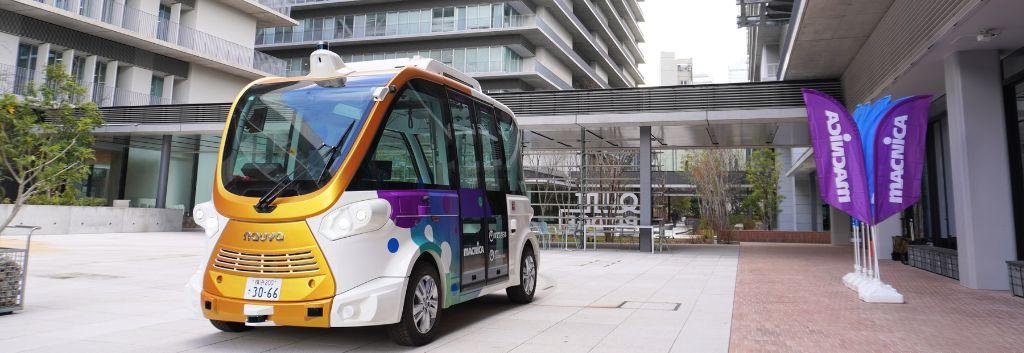

The landscape of public transportation in Japan is undergoing a seismic shift as of late 2025. In a move that redefines the concept of Mobility as a Service (MaaS), Nippon Telegraph and Telephone Corporation (NTT) has officially set the gears in motion to deploy more than 1,000 autonomous buses and robot taxis across the nation. This ambitious project is not merely a pilot program; it is a full scale commercial rollout designed to address critical demographic challenges while establishing a new global standard for smart city infrastructure.
- The Dawn of a New Mobility Era in Japan
- Understanding the Fleet: Technology and Specifications
- The Infrastructure Backbone: IOWN and 5G
- Strategic Partnerships: The NTT and Toyota Alliance
- The Economic Case for Municipalities and Businesses
- Regulatory Landscape and Government Support
- Technological Challenges and Safety Protocols
- The Role of Data Centers and Edge Computing
- Future Outlook: Beyond 2025
- Investment Opportunities and Market Growth
- NTT’s deployment
This comprehensive analysis delves deep into the operational mechanics, technological underpinnings, and market implications of NTT’s strategy. We will explore how high level enterprise fleet management, AI driven safety protocols, and next generation telecommunications are converging to make driverless mobility a daily reality for millions of Japanese citizens.
The Dawn of a New Mobility Era in Japan
The announcement by NTT to introduce a massive fleet of autonomous vehicles (AVs) marks a turning point for the Asian tech giant. Historically known for its dominance in telecommunications, NTT is pivoting aggressively into the mobility sector. The core of this initiative involves the establishment of a dedicated subsidiary, NTT Mobility Inc., which began operations earlier this month. The strategic goal is clear: to solve the acute driver shortage crisis facing Japan’s logistics and public transit sectors.
Japan is currently grappling with a super aging society. Rural areas are seeing bus routes cancelled daily due to a lack of drivers. The “2024 Problem” in logistics, which limited driver overtime, has further strained the supply chain. NTT’s solution is to automate the movement of people and goods on a scale previously unseen. By targeting a deployment of over 1,000 units, NTT is moving beyond the proof of concept phase into mass adoption.
This deployment is not happening in a vacuum. It relies on a sophisticated ecosystem of partners, including a landmark alliance with Toyota Motor Corporation and US based autonomous tech leader May Mobility. Together, these entities are creating a seamless fabric of hardware and software that promises to revitalize regional economies and provide safe, reliable transportation for the elderly and transit dependent populations.
Understanding the Fleet: Technology and Specifications
The vehicles at the heart of this deployment are marvels of modern engineering. They are not simply cars with sensors bolted on; they are purpose built machines integrated into a broader digital network.
The Robot Taxi Configuration
The robot taxis, largely based on the Toyota Sienna Autono-MaaS vehicle platform, are equipped with May Mobility’s proprietary Multi Policy Decision Making (MPDM) system. Unlike standard rule based AI, MPDM simulates thousands of possible scenarios every second to determine the safest path forward. This technology is crucial for navigating Japan’s complex urban environments, where narrow streets, cyclists, and pedestrians create unpredictable traffic patterns.
These vehicles are fitted with a comprehensive sensor suite:
- LiDAR Systems: High fidelity laser scanning provides a 360 degree 3D map of the surroundings, essential for object detection and distance measurement.
- Radar and Cameras: Long range radar detects vehicle speeds and weather conditions, while high resolution cameras interpret traffic signals, signs, and brake lights.
- Redundant Compute Units: Safety is paramount. The onboard computers feature full redundancy, ensuring that if one processor fails, a backup system immediately takes over to bring the vehicle to a safe stop.
Autonomous Buses for Mass Transit
The autonomous buses serve a different function. These larger vessels are designed for fixed route operations in municipalities. They utilize Level 4 autonomous driving capabilities, meaning they can operate without human intervention within specific geofenced areas.
For local governments, these buses represent a significant reduction in operational expenditure (OpEx). Fleet operators can manage multiple buses remotely from a centralized control center, drastically lowering the labor cost per mile. This efficiency is the key driver attracting investment from municipal budgets across prefectures like Aichi, Fukuoka, and suburban Tokyo.
The Infrastructure Backbone: IOWN and 5G
One of the most critical aspects of NTT’s strategy is the reliance on its own network infrastructure. Autonomous vehicles generate terabytes of data daily. Processing this data requires a network with ultra low latency and massive bandwidth.
NTT is leveraging its IOWN (Innovative Optical and Wireless Network) initiative to support this fleet. IOWN utilizes photonics (light) instead of electronics for data transmission, resulting in 100 times greater energy efficiency and significantly lower latency. This allows the autonomous fleet to communicate with traffic lights, road sensors, and other vehicles (V2X communication) in real time.
Enterprise Fleet Management Systems
To manage 1,000 vehicles simultaneously, NTT is deploying an enterprise grade fleet management system. This software stack is the “brain” of the operation. It handles:
- Dynamic Routing: AI algorithms adjust routes on the fly based on traffic congestion and passenger demand.
- Predictive Maintenance: IoT sensors monitor engine health, tire pressure, and battery levels, scheduling repairs before breakdowns occur. This maximizes fleet uptime and ensures consistent service reliability.
- Remote Monitoring: A team of human operators monitors the fleet from a distance. In the event a vehicle encounters a situation it cannot resolve (like a police officer using hand signals), the remote operator can provide high level guidance.
Strategic Partnerships: The NTT and Toyota Alliance
The collaboration between NTT and Toyota is a defining feature of this project. In late 2025, the two giants deepened their partnership to build a “Mobility AI Platform.” This platform combines Toyota’s vehicle expertise with NTT’s telecommunications prowess.
Toyota’s role extends beyond just supplying the chassis. They are integrating their Arene operating system, which allows for over the air (OTA) software updates. This means the fleet gets smarter over time. As the AI encounters new driving scenarios, the data is uploaded to the cloud, analyzed, and used to train the global fleet. This “fleet learning” capability creates a formidable competitive moat against other autonomous vehicle developers.
May Mobility, in which NTT has invested heavily, provides the core autonomous driving stack. Their unique approach to AI, which focuses on “imagining” outcomes rather than just reacting to inputs, has proven highly effective in mixed traffic environments. NTT holds exclusive rights to distribute May Mobility’s system in Japan, positioning them as the gatekeeper for this technology in the region.
The Economic Case for Municipalities and Businesses
Why are local governments and businesses rushing to adopt this technology? The answer lies in the economics of automation.
Reducing Operational Costs
For public transit operators, labor accounts for a substantial portion of total costs. By transitioning to autonomous buses, municipalities can redirect funds to fleet expansion or infrastructure improvements. The initial capital expenditure (CapEx) of acquiring autonomous vehicles is offset by the long term savings in salaries and training.
Revitalizing Rural Economies
In rural Japan, the lack of transportation acts as a bottleneck for economic activity. Without buses, elderly residents cannot shop, visit doctors, or participate in community events. Autonomous shuttles restore this mobility lifeline. Furthermore, these vehicles can double as logistics carriers during off peak hours, delivering parcels and groceries to remote households. This multi purpose utility increases the revenue potential for fleet operators.
New Insurance Models
The shift to autonomy also creates opportunities for the insurance sector. Liability is shifting from individual drivers to fleet operators and software providers. Major Japanese insurers like Aioi Nissay Dowa are deeply involved in this ecosystem, developing new actuarial models for Level 4 autonomy. These enterprise insurance policies are high value contracts that cover cyber security risks, software malfunctions, and operational liabilities.
Regulatory Landscape and Government Support
The Japanese government has been a proactive partner in this transition. Recognizing the demographic crisis, the Ministry of Land, Infrastructure, Transport and Tourism (MLIT) has accelerated the regulatory framework for Level 4 driving.
The Road Traffic Act amendments allow for driverless vehicles to operate on public roads under specific conditions. NTT’s project aligns perfectly with the government’s “RoAD to the L4” project, which aims to have autonomous mobility services in over 100 locations by 2027. Subsidies and grants are available for municipalities that implement these smart city solutions, further de risking the investment for local stakeholders.
Technological Challenges and Safety Protocols
Despite the optimism, deploying 1,000 autonomous vehicles is not without challenges. Safety remains the absolute priority. NTT and its partners have implemented rigorous safety protocols.
Cybersecurity Measures
Connected vehicles are potential targets for cyber attacks. The fleet utilizes advanced encryption and blockchain based authentication to secure V2X communications. The Security Operations Center (SOC) monitors the network 24/7 for any anomalies or intrusion attempts.
Weather and Environment Adaptation
Japan’s diverse climate, from the snowy roads of Hokkaido to the humid heat of Okinawa, presents a challenge for sensors. The fleet undergoes extensive testing in adverse weather conditions. The sensor cleaning systems are designed to keep LiDAR and cameras free of snow, mud, and rain, ensuring uninterrupted operation.
Social Acceptance
Winning the trust of the public is crucial. NTT is conducting community outreach programs, offering test rides and educational seminars to explain how the technology works. The design of the vehicles is also intentional; they are friendly and approachable, utilizing soft chimes and visual displays to communicate their intentions to pedestrians.
The Role of Data Centers and Edge Computing
The hidden hero of this deployment is the computing infrastructure. The “Mobility AI Platform” requires massive processing power. NTT is expanding its data center footprint to handle this load.
However, relying solely on centralized cloud servers introduces latency. To combat this, NTT is utilizing edge computing. Small, powerful servers are installed in roadside units and 5G base stations. These edge nodes process time sensitive data locally such as collision warnings while sending less urgent data to the central cloud for long term analysis. This hybrid architecture balances speed with analytical depth.
Future Outlook: Beyond 2025
The deployment of 1,000 vehicles is just the beginning. NTT envisions a future where autonomous mobility is ubiquitous.
Expansion to Logistics
While the current focus is on passenger transport, the technology is easily transferable to trucking. Autonomous heavy duty trucks could ply the expressways between Tokyo and Osaka at night, alleviating the shortage of long haul drivers. NTT is already exploring partnerships with major logistics firms to pilot this technology.
Global Export Potential
Japan is positioning itself as a leader in autonomous services, not just hardware. The operational know how gained from managing a fleet of this size is a valuable export commodity. NTT plans to package its “autonomous fleet in a box” solution comprising the vehicles, the management software, and the network infrastructure and offer it to other countries facing similar aging population issues, such as South Korea and parts of Europe.
Integration with Smart Cities
The ultimate vision is the fully integrated smart city. In this future, your calendar appointment automatically summons a robot taxi. The taxi communicates with the traffic grid to ensure all lights turn green as you approach. The vehicle drops you off and immediately heads to a charging station that balances the city’s energy grid. NTT’s IOWN concept is the blueprint for this interconnected reality.
Investment Opportunities and Market Growth
For investors and industry watchers, the rise of the autonomous fleet market in Japan signals several high growth areas.
- Fleet Management Software: The demand for sophisticated platforms that can orchestrate mixed fleets of human and robot drivers is skyrocketing.
- Sensor Technology: As demand scales, the cost of LiDAR and radar units will decrease, but the volume will drive significant revenue for component manufacturers.
- Telematics and V2X: The infrastructure required to let cars “talk” to the road is a massive civil engineering and tech opportunity.
- MaaS Platforms: Apps that aggregate train, bus, taxi, and scooter rides into a single subscription service are becoming the interface for modern urban life.
NTT’s deployment
NTT’s deployment of more than 1,000 autonomous buses and robot taxis is a bold declaration of intent. It signifies that Japan is ready to reclaim its position at the cutting edge of transportation technology. By combining the industrial might of Toyota, the agility of May Mobility, and the network supremacy of NTT, this alliance is building a sustainable, safe, and efficient future.
For the residents of Japan, this means more freedom of movement. For the business world, it opens a frontier of high tech opportunities in AI, infrastructure, and services. As these vehicles roll out onto the streets in 2025 and 2026, they carry with them the promise of a society where mobility is no longer a constraint, but a universally accessible utility.
The wheels are turning. The sensors are spinning. Japan’s autonomous future has arrived.