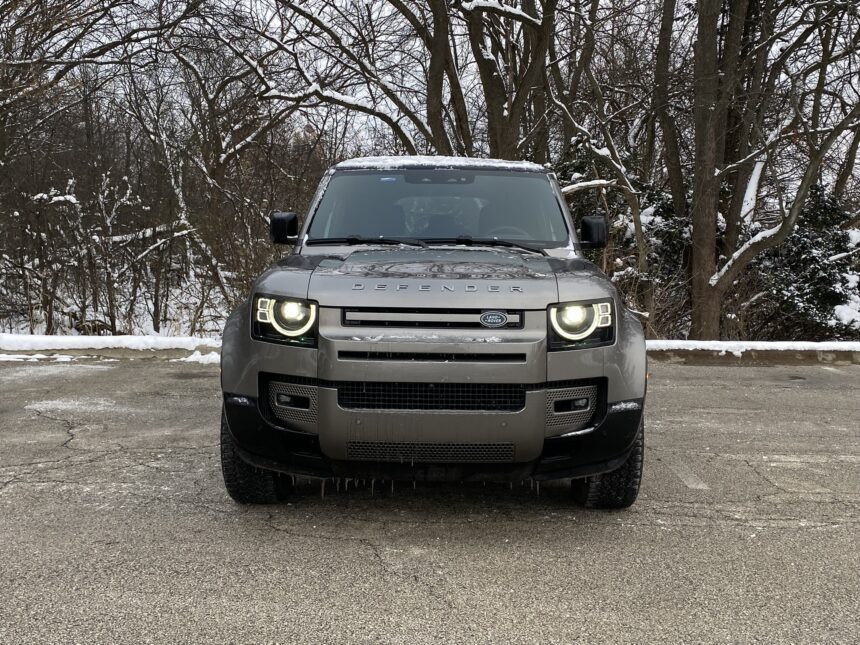


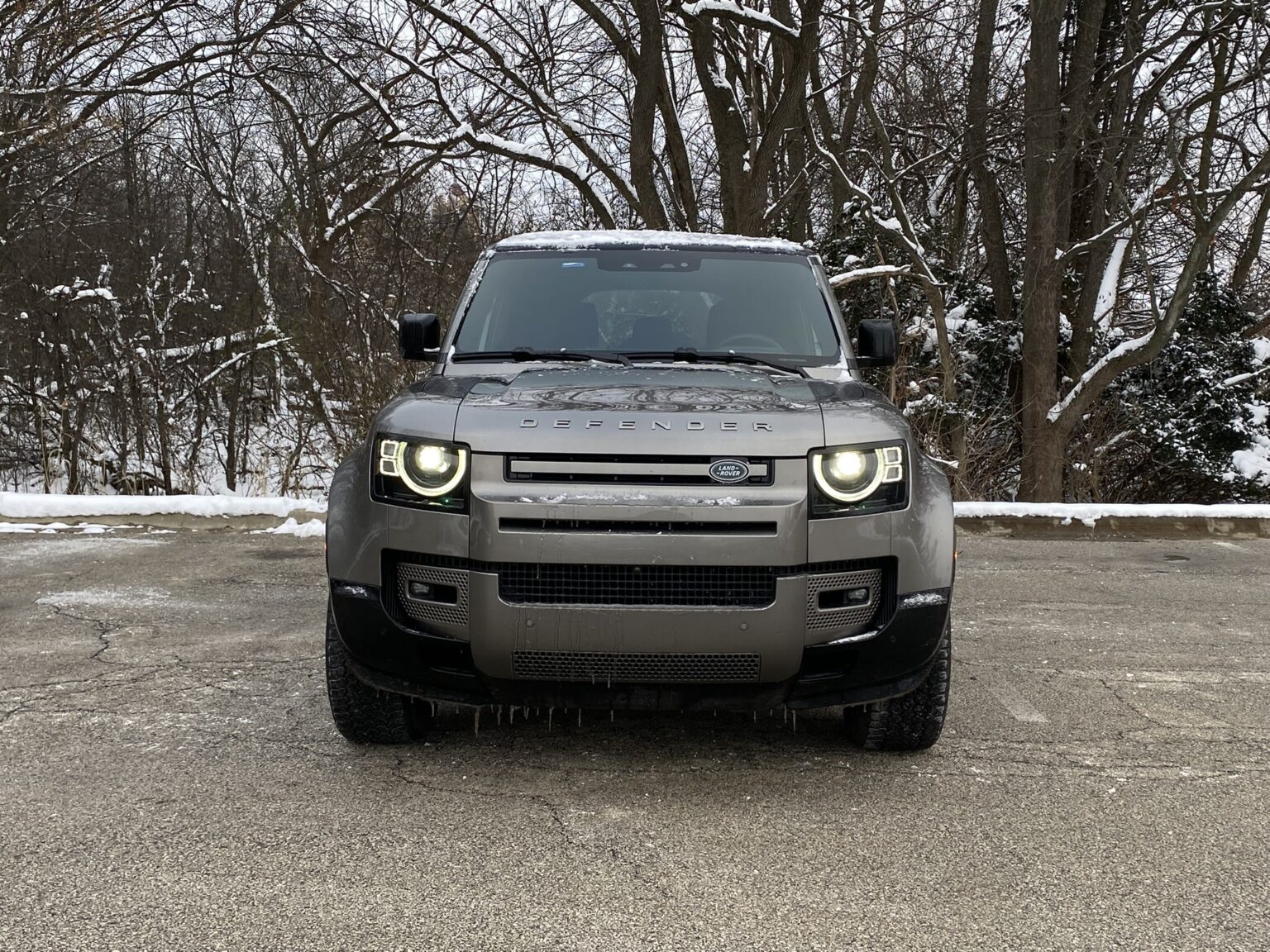

Chicago winters are not merely a season; they are a stress test for machinery and human will alike. When the forecast for the first week of December 2025 predicted a convergence of lake-effect snow and a plunging polar vortex, most residents scrambled to stock their pantries. I, however, did something different. I grabbed the keys to a 2025 Land Rover Defender 110 X-Dynamic SE. My mission was simple yet perilous. I intended to navigate the concrete canyons of the Loop and the frozen expanse of Lake Shore Drive to see if this British icon could truly conquer an American deep freeze.
- The Setup: A frozen Windy City
- First Impressions: The Fortress of Solitude
- Engineering vs. The Elements: The P400 Engine
- Mastering the Slide: Terrain Response 2
- Technology That Actually Helps
- The Financial Equation: Value, Insurance, and Maintenance
- Cargo and Practicality
- Comparison: Defender vs. The World
- The Verdict: The Ultimate Winter Warrior?
The resulting experience was not just a test drive. It was a revelation in automotive engineering, luxury insulation, and the peace of mind that comes from driving a vehicle built to survive the apocalypse. If you are considering a luxury SUV purchase this year, or simply looking for the safest family hauler to protect your loved ones from the unpredictable elements, this deep dive is for you.
The Setup: A frozen Windy City
The storm hit on the weekend of December 6th, dropping nearly 5 inches of heavy, wet snow at O’Hare International Airport, with localized totals reaching 7 inches in the northern suburbs. As I write this on December 11th, the temperature hovers around -2°C, and the city is still digging out, with more snow showers predicted tonight. The streets are a chaotic mix of black ice, slush, and aggressive salt trucks. This is the environment where “all-season” tires usually go to die, and where lesser crossovers end up in the ditch waiting for a tow truck.
The vehicle for this expedition was the 2025 Land Rover Defender 110 X-Dynamic SE, finished in a stealthy Carpathian Grey. Under the hood sat the P400 powertrain, a mild-hybrid 3.0-liter turbocharged inline-six engine. On paper, it promises 395 horsepower and 406 lb-ft of torque. But specs on a website are one thing; delivering that power smoothly on a surface with the friction coefficient of a hockey puck is another entirely.
First Impressions: The Fortress of Solitude
Walking up to the Defender in a biting wind chill is an exercise in appreciation for design. The boxy silhouette is not just retro posturing. It is functional defiance against the elements. The door handles are substantial, easy to grip even with thick winter gloves. As I climbed inside, the heavy “thud” of the door closing instantly silenced the howling wind outside.
The interior of the X-Dynamic SE is a masterclass in utilitarian luxury. It does not coddle you with delicate veneers that you are afraid to touch. Instead, it offers Robustec materials and grained leather that feel indestructible yet premium. I immediately engaged the Cold Climate Pack features. The heated windshield is a non-negotiable feature for Chicago drivers. Within two minutes, the lattice of invisible wires had melted a layer of ice that would have taken ten minutes of furious scraping on any other car. The heated steering wheel and heated seats (which get genuinely hot, not just lukewarm) completed the thermal envelope.
For those researching luxury car interiors, the Defender strikes a unique balance. It is nicer than a Jeep Wrangler but feels more purposeful than a BMW X5. It feels worth its $85,000 as-tested price tag, especially when you consider the durability factor. This is a cabin designed to be lived in, not just looked at.
Engineering vs. The Elements: The P400 Engine
Starting the engine in sub-zero temperatures revealed the benefits of modern mild-hybrid technology. There was no hesitation, just a smooth purr as the inline-six fired to life. The 48-volt electric supercharger is the secret weapon here. It fills in the torque gaps at low RPMs, which is critical in snow. You do not want a sudden surge of turbo power breaking your traction. You want linear, predictable delivery.
Pulling out of my unplowed alley, the snow was about shin-deep. In a standard sedan, this would be a “call your boss and say you are stuck” moment. In the Defender, I simply raised the Electronic Air Suspension to its off-road height, granting me a massive 11.5 inches of ground clearance. I did not even need to touch the throttle aggressively. The vehicle simply walked through the drift as if it were loose gravel.
The 8-speed automatic transmission is almost telepathic. It held gears longer when I needed engine braking on icy descents and shifted imperceptibly smooth on the highway. For those comparing auto loan rates and monthly payments, knowing that you are paying for this level of mechanical sophistication makes the financial commitment easier to justify.
Mastering the Slide: Terrain Response 2
The heart of the Defender’s capability is the Terrain Response 2 system. As I merged onto a slush-covered Kennedy Expressway, I switched the dial to “Grass/Gravel/Snow.” This mode softens the throttle response and tells the traction control system to allow just enough slip to find grip without cutting power completely.
Chicago drivers know the terror of changing lanes across the “slush ridge” that forms between lanes. It is a prime cause of highway accidents. In the Defender, crossing this ridge was a non-event. The all-wheel-drive system vectors torque so quickly that the vehicle never felt unsettled. I could feel the electronics making micro-adjustments hundreds of times a second, keeping the 5,000-pound SUV tracking straight and true.
There was a moment near the Ohio Street exit where a patch of black ice caught the car in front of me—a rear-wheel-drive sports sedan that had no business being out. As they fishtailed, I had to brake firmly. The Defender’s ABS pulsed rapidly, bringing me to a controlled stop with plenty of room to spare. This is where the cost of car insurance is justified; avoiding just one collision pays for the safety features ten times over. The confidence this vehicle inspires is dangerous only if it makes you overconfident, but the feedback through the steering wheel is good enough to let you know exactly where the limit of adhesion is.
Technology That Actually Helps
We live in an era of screen overload, but the Defender’s Pivi Pro infotainment system is one of the best. The 11.4-inch curved touchscreen is responsive and high-definition. During the storm, the navigation system routed me around three stalled vehicles and a jackknifed tractor-trailer. The real-time traffic data was spot on.
More impressively, the 3D Surround Camera system is not just a gimmick for parking. In the snow, the cameras allowed me to see exactly how close my tires were to the curb, which was hidden under a foot of white powder. This prevents the dreaded “curb rash” on your expensive 20-inch alloy wheels, a small detail that saves money on cosmetic repairs later.
For families, the Wi-Fi hotspot kept my passengers entertained, streaming content without buffering despite the heavy cloud cover. The Meridian Surround Sound System, with its 700 watts of power, provided a cinematic soundtrack to our slow-motion crawl through the blizzard. If you are looking into best family SUVs for 2025, the tech package in the Defender is a strong selling point that rivals anything from Silicon Valley.
The Financial Equation: Value, Insurance, and Maintenance
Let us address the elephant in the room: the cost. The 2025 Defender 110 X-Dynamic SE is not a budget vehicle. With a starting price north of $72,000 and options pushing it closer to $90,000, it represents a significant investment. However, when you analyze the total cost of ownership, the picture becomes more nuanced.
First, resale value. The Defender has held its value remarkably well since its reintroduction. Unlike some luxury sedans that depreciate like a falling stone the moment they leave the lot, the Defender commands strong prices on the secondary market. This lowers the effective cost of a lease and protects your equity if you buy.
Second, insurance premiums. While insuring a luxury SUV is more expensive than a minivan, the Defender’s robust safety suite—automatic emergency braking, lane keep assist, and blind-spot monitoring—can help mitigate these costs. Many car insurance companies offer discounts for vehicles equipped with these advanced driver-assistance systems (ADAS). It is worth shopping around and comparing auto insurance quotes to find a carrier that recognizes the safety rating of this vehicle.
Third, reliability and maintenance. Land Rover has made strides in quality control. The P400 engine is proving to be a robust unit. While maintenance on a complex European SUV will always be higher than a domestic truck, the interval for scheduled service is reasonable. Investing in a prepaid maintenance plan or an extended car warranty can lock in these costs and provide peace of mind for long-term ownership.
Cargo and Practicality
A snowstorm usually means hauling gear. Snow shovels, bags of salt, heavy coats, and emergency kits. The Defender 110 swallowed it all. The cargo area, accessible via the side-hinged rear door, is expansive. I particularly appreciate the durable rubber flooring on the seatbacks and cargo floor. When you throw wet, snowy boots or a dripping shovel in the back, you are not ruining plush carpet. You simply wipe it down later. This practical touch is a reminder that the Defender is a tool, not just a jewel.
The rear seats offer generous legroom, even for adults in bulky winter gear. The sheer height of the cabin gives an airy feel, combating the claustrophobia of a dark, stormy winter day. There are USB-C ports everywhere, ensuring that every device remains charged, which is a critical safety factor if you were to get stranded.
Comparison: Defender vs. The World
How does it stack up against the competition?
- Vs. Jeep Wrangler: The Wrangler is the only other vehicle that matches the Defender’s off-road prowess, but driving a Wrangler on the highway in a blizzard is exhausting. The wind noise is deafening, and the solid axle suspension wanders. The Defender is a sanctuary by comparison.
- Vs. Lexus GX 550: The new GX is a worthy adversary and likely wins on long-term reliability metrics. However, the Defender feels more athletic and offers a more sophisticated ride thanks to its unibody construction and independent air suspension.
- Vs. BMW X5: The X5 handles better on dry pavement, undoubtedly. But in 6 inches of unplowed snow, the X5’s lower ground clearance and road-biased AWD system become liabilities. The Defender goes where the X5 fears to tread.
The Verdict: The Ultimate Winter Warrior?
After three days of driving through one of Chicago’s nastiest early-winter storms, I came away with a newfound respect for the 2025 Land Rover Defender. It transforms a terrifying commute into a manageable, even enjoyable, experience. It separates you from the chaos outside, wrapping you in a cocoon of warmth, safety, and capability.
Is it overkill for the school run? Perhaps. But in a world where weather patterns are becoming increasingly extreme and unpredictable, overkill is just another word for prepared. The best SUV is the one that gets you home safely every single time, regardless of what the sky throws at you.
For those in the market, now is an interesting time to buy. Auto finance trends in late 2025 suggest that while rates are higher than a few years ago, manufacturers are offering competitive incentives to move inventory before the year ends. If you can secure a favorable auto loan or lease deal, the Defender 110 X-Dynamic SE is arguably the most complete all-weather vehicle on the road today.
As the snow continues to fall outside my window, burying the city in white, I have the keys to the Defender in my pocket. And honestly? I can’t wait to go back out there.