


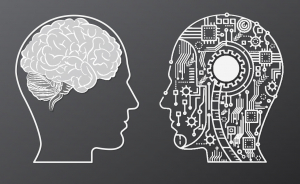

The human brain and computers are two of the most remarkable systems in existence, each representing a pinnacle of complexity in their respective domains.
- The Human Brain: A Biological Marvel
- Computers: Engines of Precision and Speed
- Comparing Structure and Function
- Neuromorphic Computing: Bridging the Gap
- Insights from Comparing Brains and Computers
- Applying Knowledge of the Brain and Computers in Daily Life
- Future Prospects: Human and Machine Collaboration
- Conclusion
At first glance, it might seem like the brain and a computer are comparable; both process information, store memory, and solve problems. However, the methods they employ and the efficiencies they achieve reveal profound differences.
Computers operate through pre-programmed logic, executing calculations with incredible speed and precision, while the human brain thrives on adaptability, emotional nuance, and creativity.
Understanding these differences not only deepens our appreciation for human cognition but also informs the development of more intelligent, brain-inspired technologies.
This discussion explores the contrasts and connections between the human brain and computers, revealing insights that can be applied in everyday life to enhance cognitive function and decision-making.
The Human Brain: A Biological Marvel
The human brain is an extraordinarily complex organ composed of approximately 86 billion neurons, each forming thousands of synaptic connections with others. These neural networks transmit signals through electrical impulses and chemical neurotransmitters, orchestrating thought, sensation, and behavior.
Unlike computers, which operate through a rigid hierarchy of processors and memory, the brain functions as a dynamic, parallel-processing system.
Its memory is not stored in discrete locations but is distributed across these networks, allowing humans to make associations, draw analogies, and retrieve information in a flexible and context-sensitive manner.
Studies suggest the brain has the capacity to store about one petabyte of information, roughly equivalent to over a thousand 1-terabyte solid-state drives, yet it achieves this with astonishing energy efficiency.
Operating on approximately twenty watts, the brain performs at levels that would require supercomputers consuming millions of watts to match (crucial.com).
Memory in humans is not merely about quantity; it is about quality and interconnectivity. The associative nature of memory allows the brain to connect seemingly unrelated concepts, facilitating creativity and problem-solving.
The human brain can also prioritize information dynamically, emphasizing relevant details while filtering out noise a capacity still far beyond what most computers can achieve without sophisticated programming.
This ability to adapt to novel situations, learn from experience, and even anticipate outcomes gives the human brain an edge in areas that require judgment, intuition, and complex decision-making.
Computers: Engines of Precision and Speed
Computers, in contrast, are engineered for speed, accuracy, and repetitive execution. Modern computers utilize silicon-based processors and memory units designed to perform billions of operations per second.
Unlike the human brain, which operates in a massively parallel and energy-efficient manner, computers perform sequential calculations at astonishing speeds, making them ideal for tasks requiring precision, large-scale data processing, and algorithmic problem-solving.
Memory in computers is organized hierarchically, from fast-access cache to large-capacity storage, allowing rapid retrieval of information but lacking the associative flexibility inherent to the human brain.
The speed of a computer is unmatched when it comes to raw calculations. Where a human might spend minutes solving a complex mathematical problem, a computer can perform the same task in milliseconds. Yet this efficiency comes with limitations.
Computers struggle to generalize knowledge across domains, understand nuanced contexts, or navigate ambiguity without explicit programming. Emotional intelligence, intuition, and creativity remain outside their capabilities.
This distinction illustrates why, despite the extraordinary power of computers, they cannot replicate the richness and adaptability of human cognition.
Comparing Structure and Function
When comparing the human brain and computers side by side, several contrasts become evident. The brain’s billions of neurons form intricate networks capable of parallel processing, while computers rely on discrete cores and memory units designed for sequential execution.
Processing speed in computers is orders of magnitude faster than the brain, yet the brain compensates through efficiency, adaptability, and the ability to integrate diverse types of information simultaneously.
Energy consumption highlights another divergence: the brain operates on minimal power compared to supercomputers performing similar tasks.
Additionally, the human brain integrates emotional intelligence naturally, guiding social behavior and decision-making, whereas computers operate without awareness or affect.
Despite these differences, there are fascinating similarities. Both systems rely on input-output mechanisms, store information, and execute computations.
Neural networks in artificial intelligence, for instance, are inspired by the structure and function of biological neurons, demonstrating how understanding the brain informs technological advancement.
This cross-pollination between neuroscience and computing has led to the emergence of brain-inspired, or neuromorphic, computing systems that seek to combine the best of both worlds.
Neuromorphic Computing: Bridging the Gap
Neuromorphic computing represents an innovative frontier where technology takes cues from the human brain. By mimicking the architecture of neurons and synapses, neuromorphic chips can process information in parallel, adapt to new inputs, and learn from experience.
Unlike traditional computers, these systems aim to operate with minimal energy consumption while performing complex tasks efficiently. Applications for neuromorphic computing are broad, ranging from artificial intelligence and robotics to cognitive modeling and neuroscience research (nist.gov).
For example, robots equipped with neuromorphic chips can navigate unpredictable environments, adapt to changes, and even learn new behaviors without extensive pre-programming.
Similarly, AI systems inspired by brain architecture are capable of pattern recognition, decision-making under uncertainty, and nuanced problem-solving, bringing computational capabilities closer to human-like intelligence.
While these technologies are still in development, they demonstrate the potential for merging the precision of computers with the adaptability of the human brain, potentially revolutionizing both technology and our understanding of cognition.
Insights from Comparing Brains and Computers
Comparing the human brain to computers offers practical lessons. The brain’s strength lies in its flexibility, creativity, and efficiency, while computers excel at speed, storage, and precision. Recognizing these complementary strengths can help us optimize learning, decision-making, and daily productivity.
For instance, while computers can process large datasets or perform repetitive calculations more efficiently, humans can interpret ambiguous data, consider context, and generate innovative solutions.
This balance between human cognition and computational power is particularly important in areas like artificial intelligence, data analytics, and complex problem-solving.
Understanding these differences also emphasizes the value of enhancing human cognition rather than merely relying on machines. Engaging in continuous learning, maintaining physical and mental health, and fostering social and emotional intelligence allow individuals to leverage the full potential of their brains.
Incorporating technology as a tool, rather than a replacement, ensures that humans can complement machines in ways that maximize efficiency, creativity, and judgment.
Applying Knowledge of the Brain and Computers in Daily Life
The interplay between the human brain and computers has profound implications for personal and professional growth. By appreciating how the brain functions differently from a computer, we can develop habits and strategies that enhance cognitive performance.
For instance, approaching problem-solving with creativity and associative thinking allows individuals to tackle complex issues more effectively than relying solely on linear, computational approaches.
Similarly, balancing screen time with activities that stimulate the brain such as reading, creative writing, or hands-on problem-solving can promote mental flexibility and resilience.
Physical activity, sleep, and nutrition play critical roles in supporting brain health, reflecting the principle that optimal performance requires both biological and cognitive resources.
Engaging in challenging intellectual activities stimulates neural growth and strengthens connections, while social interactions enhance emotional intelligence and contextual understanding.
By leveraging these insights, individuals can cultivate a more adaptable and efficient mind, capable of complementing technological tools rather than competing with them.
Future Prospects: Human and Machine Collaboration
The ongoing dialogue between neuroscience and computer science continues to shape the future of technology. As neuromorphic computing and AI advance, humans may increasingly collaborate with machines in ways that amplify strengths while mitigating weaknesses.
Imagine AI systems capable of handling vast datasets and performing precise calculations while humans provide judgment, creativity, and contextual understanding.
This partnership has the potential to revolutionize fields such as healthcare, scientific research, education, and creative industries.
Moreover, insights from the human brain can inspire more efficient and ethical computing. For example, understanding the brain’s energy efficiency can guide the design of low-power computing systems.
Similarly, studying human cognition and learning processes can inform AI systems that adapt to new information in a more nuanced and human-like manner. By blending the strengths of biological intelligence and computational power, society can achieve technological progress that aligns with human values and cognitive capabilities.
Conclusion
While the human brain and computers operate on fundamentally different principles, both are essential to understanding and advancing intelligence. The brain excels in adaptability, creativity, and emotional intelligence, while computers offer unmatched speed, precision, and storage capacity.
Together, they provide a powerful framework for exploring cognition, enhancing productivity, and developing technologies that complement human strengths.
By studying the interplay between biological and artificial systems, we gain not only a deeper appreciation for the human mind but also the potential to harness technology in ways that amplify our creativity, problem-solving abilities, and overall quality of life.
Backlinks
- Crucial: How Does the Human Brain Compare to a Computer?
- National Institute of Standards and Technology: Brain-Inspired Computing
- PubMed Central: The Computational Power of the Human Brain