


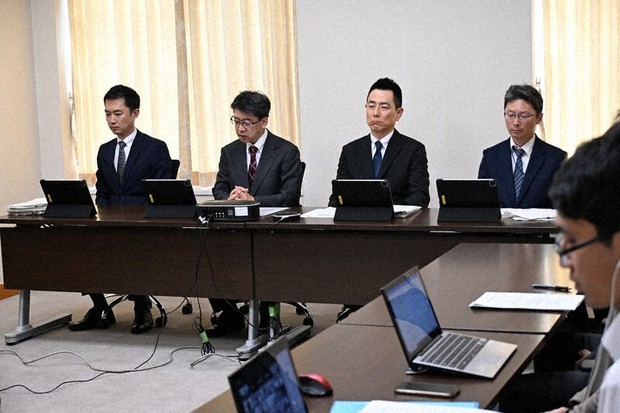

The corridors of Kasumigaseki, the heartbeat of the Japanese government in Tokyo, have long been synonymous with late night lights and stacks of paper documents. For decades, the image of the Japanese bureaucrat has been one of tireless dedication, often at the cost of personal well being. However, as we move through December 2025, a profound transformation is taking place. The Japanese government is no longer just discussing digital transformation; it is actively deploying advanced artificial intelligence to save its workforce from the brink of exhaustion.
- The Crisis of the Overworked Bureaucrat in Japan
- The Rise of the AI Promotion Act of 2025
- Technological Implementation in Government Agencies
- The Role of Global Tech Giants in Japans AI Evolution
- Microsoft Azure and the 2.9 Billion Infrastructure Boost
- AWS and Google Cloud The Battle for Government Cloud
- Digital Transformation vs AI Transformation (DX to AX)
- The Economic Impact of AI Adoption in the Public Sector
- Ethical Considerations and the AI Safety Institute
- Case Studies Success Stories from the Digital Agency
- The Future Roadmap What to Expect in 2026 and Beyond
This shift is not merely about efficiency. It is a necessary response to the demographic reality of a shrinking population and the complex demands of a modern global economy. By integrating generative AI and automated systems into the daily workflows of central ministries, Japan is setting a global precedent for how a nation can leverage technology to sustain high level governance under pressure.
The Crisis of the Overworked Bureaucrat in Japan
To understand the urgency of AI adoption, one must first grasp the depth of the labor crisis within Japan’s administrative center. The term Karoshi, or death from overwork, has historically cast a shadow over both the private and public sectors. In Kasumigaseki, bureaucrats often work over 100 hours of overtime per month, particularly during Diet sessions when they must prepare responses to parliamentary questions overnight.
Historical Context of Labor in Kasumigaseki
The traditional Japanese bureaucratic model relied on a massive influx of elite graduates who were willing to sacrifice their personal lives for national service. This model worked during the rapid growth eras of the 20th century. However, in 2025, the talent pool is smaller, and the complexity of policy making has exploded. Issues like cybersecurity, semiconductor supply chains, and climate change require rapid data processing that manual labor can no longer provide.
The Human Cost of Policy Making
The psychological and physical toll on young officials has led to a declining interest in civil service careers. Recent data from the National Personnel Authority indicated a sharp rise in early resignations among fast track officials. The government realized that without a radical change in the work environment, the quality of national policy would inevitably suffer. This realization served as the primary catalyst for the AI initiatives we see today.
The Rise of the AI Promotion Act of 2025
A pivotal moment in this journey occurred in May 2025 with the passage of the Act on Promotion of Research, Development, and Utilization of AI Related Technology. Coming into full effect on September 1, 2025, this legislation transitioned AI from a peripheral tool to a national priority. Unlike the more restrictive regulatory frameworks seen in other regions, Japan’s AI Promotion Act focuses on fostering an environment where innovation and safety coexist.
Key Pillars of the New Legislation
The act is built on four central principles. First, it aims to enhance Japan’s international competitiveness in the tech sector. Second, it promotes the systematic social implementation of AI across all sectors. Third, it ensures that data acquisition for AI training is streamlined, particularly through amendments to the Act on the Protection of Personal Information. Finally, it mandates the establishment of the AI Strategic Headquarters, led by the Prime Minister, to act as a control tower for all government AI policies.
Sovereign AI and National Security
One of the most discussed aspects of the 2025 strategy is the concept of sovereign AI. The Japanese government has recognized that relying solely on foreign models presents risks to national security and data sovereignty. Consequently, there has been a massive push to develop domestic large language models, such as the Tsuzumi model developed by NTT, which are optimized for the Japanese language and cultural nuances.
Technological Implementation in Government Agencies
As of December 20, 2025, several ministries have already moved beyond pilot programs into full scale implementation. The Digital Agency, established only a few years ago, is leading the charge by providing standardized AI guidelines for all government procurements.
Generative AI as a Policy Research Assistant
The Ministry of Economy, Trade and Industry has been a frontrunner in utilizing generative AI for policy research. Bureaucrats now use internal AI systems to summarize thousands of pages of international trade agreements and technical specifications in seconds. This allows officials to focus on strategic decision making rather than the rote task of data extraction.
Automation of Diet Question Responses
Perhaps the most significant application is in the preparation of Diet responses. Historically, when a member of parliament submitted a question, bureaucrats would spend the entire night drafting a response, cross referencing previous statements and current laws. Today, AI systems pre trained on historical Diet records and legal databases can generate accurate first drafts of these responses. These drafts are then reviewed and refined by humans, reducing the time spent on this task by over 60 percent.
The Role of Global Tech Giants in Japans AI Evolution
While domestic development is crucial, the partnership with global technology leaders has been essential for providing the necessary infrastructure. The year 2025 has seen record breaking investments from major players in the cloud and AI sectors.
Microsoft Azure and the 2.9 Billion Infrastructure Boost
Microsoft’s commitment to Japan reached new heights this year. Following a 2.9 billion dollar investment plan, the company has successfully expanded its cloud network across Japan. This includes the deployment of high performance computing clusters equipped with NVIDIA GPUs. These resources are now being utilized by the Ministry of Internal Affairs and the Digital Agency to power their internal OpenAI based services, ensuring that government data remains within Japanese borders while benefiting from world class processing power.
AWS and Google Cloud The Battle for Government Cloud
Amazon Web Services and Google Cloud have also intensified their presence. The Digital Agency’s Government Cloud initiative has created a competitive marketplace where these providers must meet over 330 strict security and performance standards. The inclusion of domestic providers like Sakura Internet alongside these giants ensures a resilient and diverse cloud ecosystem that supports the government’s AI ambitions.
Digital Transformation vs AI Transformation (DX to AX)
The narrative in Japan has shifted from simple Digital Transformation to what experts are now calling AI Transformation. While DX was about moving from paper to digital, AX is about leveraging that digital data to automate intelligence itself.
In late 2025, we are seeing the emergence of the Agent Experience. This involves the use of AI agents that can perform multi step tasks across different software platforms. For a bureaucrat, this means an AI agent can not only summarize a report but also update the relevant databases, schedule follow up meetings with stakeholders, and flag potential legal conflicts automatically.
The Economic Impact of AI Adoption in the Public Sector
The shift toward AI in government has ripple effects throughout the broader economy. When the public sector becomes more efficient, it lowers the administrative burden on businesses and citizens alike.
Macroeconomic Productivity Gains
Recent studies from the Research Institute of Economy, Trade and Industry suggest that AI adoption in the workplace could boost labor productivity by 0.5 to 0.6 percent at the macro level. While this may seem like a small number, for an economy the size of Japan’s, it represents billions of dollars in added value and a crucial buffer against the shrinking workforce.
Solving the Labor Shortage with Intelligent Systems
The 2024 problem, which primarily affected the logistics and construction sectors due to new overtime regulations, was a wake up call. In 2025, the government is applying the lessons learned from those sectors to the civil service. By automating routine administrative tasks, the government can maintain a high level of service even as the number of available civil servants decreases due to retirement and demographic shifts.
Ethical Considerations and the AI Safety Institute
As with any rapid technological advancement, the risks of AI must be carefully managed. The Japanese government has taken a proactive stance by doubling the staff at the AI Safety Institute in December 2025.
Data Privacy and the APPI Amendments
One of the most significant hurdles for AI development is the protection of personal information. The 2025 amendments to the Act on the Protection of Personal Information allow for the acquisition of data for AI training without explicit individual consent, provided the data is used to generate statistical information or model development that cannot be traced back to specific individuals. This balance is critical for feeding the data hungry algorithms that drive modern AI.
Managing Risks of Hallucination and Disinformation
The government is also hyper aware of the risks of AI hallucinations, where a model generates false but plausible sounding information. To mitigate this, government AI systems use Retrieval Augmented Generation techniques. This ensures that the AI only generates responses based on verified, internal government documents rather than its general training data. Furthermore, the AI Safety Institute is developing advanced detection tools to combat the spread of deepfakes and AI generated disinformation during election cycles.
Case Studies Success Stories from the Digital Agency
The Digital Agency’s recent activity report highlights several successful projects that have transformed daily life for both bureaucrats and citizens.
- Municipal Procedure Automation: Processing times for common resident applications have been reduced by over 10 minutes per person, while internal overtime for municipal employees has dropped by an average of 30 hours per month.
- My Number Card Integration: The deep integration of AI with the My Number system has enabled personalized government services. Citizens can now receive automated alerts for subsidies or health checkups tailored to their specific life stages.
- Disaster Response AI: During recent seismic events, AI systems were used to process satellite imagery and social media feeds in real time to identify the most affected areas, allowing for a much faster deployment of emergency services.
The Future Roadmap What to Expect in 2026 and Beyond
As we look toward the final days of 2025, the Japanese government is preparing to approve its first AI Basic Plan in a cabinet meeting. This plan will set the direction for the next five years of AI policy. We can expect an even greater emphasis on human AI collaboration, where the goal is not to replace human officials but to empower them with a digital co pilot.
The evolution of Japan into the world’s most AI friendly nation is well underway. By addressing the core issue of overwork through intelligent automation, the Japanese ministries are ensuring that they can continue to serve the public effectively in an era of unprecedented change.