


The landscape of global retail is undergoing a quiet yet profound transformation as legacy brands pivot toward deep technology integration. At the forefront of this movement is Zara, the flagship brand of the Inditex group, which has recently implemented a series of artificial intelligence protocols that are fundamentally altering how products move from design concepts to customer closets. This shift is not merely about staying relevant in a digital age but about re-engineering the very fabric of retail operations to achieve unprecedented levels of efficiency and responsiveness.
- The Generative AI Revolution in Digital Content Production
- Precision Logistics: The Role of AI in Supply Chain Resilience
- RFID Technology and the Real-Time Data Stream
- Predictive Analytics: Forecasting the Next Cultural Wave
- Re-engineering the Employee Experience with Conversational BI
- Automation in Fulfillment: The BOPIS Revolution
- Sustainable Fashion through Algorithmic Efficiency
- The Strategy of the Modern Flagship
- The Global Economic Impact of Retail AI
- Future Projections: What to Expect in 2026
The recent analysis titled “Zara’s use of AI shows how retail workflows are quietly changing” highlights a critical moment in the industry. As of late 2025, the focus has shifted from experimental AI pilots to the seamless integration of machine learning within every facet of the business. By focusing on removing friction from repeatable tasks at scale, Zara is setting a new benchmark for how enterprise-level AI should be deployed in the fashion sector.
The Generative AI Revolution in Digital Content Production
One of the most striking developments in Zara’s recent workflow updates involves the use of generative AI in the production of digital assets. For years, the bottleneck for fast fashion has been the speed at which items can be photographed and uploaded to global platforms. A single garment might require different visual treatments for markets in Europe, Asia, and the Americas, traditionally requiring multiple photoshoots and long post-production cycles.
As reported in December 2025, Zara is now utilizing advanced generative models to enhance and adapt imagery of real-life models. This technology allows the brand to take a single set of approved photographs and digitally “dress” models in various outfits or adjust the styling to suit specific regional preferences. This approach does not replace human models; rather, it extends the utility of every photoshoot.
By reducing the need for repetitive physical production, the brand can launch new collections across its digital channels hours after they are finalized. This compression of the content cycle is vital for maintaining the “fast” in fast fashion. It ensures that the digital storefront is always perfectly aligned with the physical inventory available in distribution centers. The ethical implementation of this tech, which includes model consent and compensation for AI-enhanced variations, suggests a sustainable path forward for creative automation in the corporate world.
Precision Logistics: The Role of AI in Supply Chain Resilience
Beyond the visual aspects of the brand, the most significant changes are occurring within the logistics and supply chain management departments. The global retail environment of 2025 is characterized by extreme volatility in consumer demand and geopolitical shifts. To counter these challenges, Zara has invested heavily in an AI-powered logistics framework that treats the supply chain as a living, thinking organism.
The Inditex group has allocated approximately 900 million Euros annually through 2024 and 2025 to scale its logistics capabilities. This investment has birthed a new generation of automated distribution centers, such as the massive hub in Zaragoza, Spain. These facilities utilize AI algorithms to plan shipping routes in real time, accounting for weather patterns, fuel prices, and delivery schedules to ensure that products reach their destination with minimal carbon footprints and maximum speed.
These systems are capable of predicting potential disruptions before they occur. By monitoring a vast array of global data points, from port congestion to emerging trade regulations, the AI can recommend alternative shipping routes or supplier adjustments instantaneously. This level of foresight allows Zara to maintain its famous seven-day turnaround from design to shelf, even when global trade routes are under pressure.
RFID Technology and the Real-Time Data Stream
The backbone of Zara’s intelligent inventory system is the sophisticated use of Radio Frequency Identification (RFID) technology. Unlike traditional barcodes that require a line of sight and manual scanning, RFID chips embedded in every garment label act as continuous data sensors. This allows for a level of inventory granularity that was previously impossible.
When an item is moved from a backroom to the sales floor, the system updates instantly. When a customer takes a garment into a fitting room, the AI tracks the interaction. If a specific dress is frequently tried on but rarely purchased, the system flags a potential issue with fit or pricing. This feedback loop provides designers with qualitative data that goes far beyond simple sales figures.
In 2025, this technology has been integrated with smart mirrors in flagship stores. When a customer brings an item to a mirror, the RFID tag triggers a display of complementary products, essentially acting as an in-person recommendation engine. This creates a seamless omnichannel experience where the digital insights of an app are brought into the physical retail space.
Predictive Analytics: Forecasting the Next Cultural Wave
The true power of Zara’s AI lies in its ability to predict trends before they become mainstream. Traditional fashion retailers often operate on seasonal cycles, making design decisions months in advance. Zara has dismantled this model by using machine learning to perform “social listening” on a global scale.
The brand’s AI systems scan millions of data points daily, including social media posts, fashion blog commentary, and search engine trends. By analyzing color palettes, fabric textures, and silhouette preferences across different demographics, the system identifies emerging style signals. These insights are then funneled directly to the design teams in Arteixo, Spain, who can prototype and produce relevant items in record time.
This demand-driven model ensures that the brand is not guessing what customers want. Instead, it is responding to actual cultural shifts in real time. The impact on profitability is significant, as it minimizes the risk of overproduction and the need for deep markdowns on unpopular items.
Re-engineering the Employee Experience with Conversational BI
A quiet revolution is also taking place in how store managers and corporate staff interact with data. Previously, obtaining specific sales reports or inventory forecasts required specialized knowledge of business intelligence (BI) tools. In late 2025, Zara began rolling out conversational BI interfaces that allow employees to query the company’s massive datasets using natural language.
A store manager in London can now simply ask their mobile device: “Which floral prints are trending in the West End today?” and receive an instant visual report. This democratization of data empowers local staff to make informed decisions about their specific store layouts and stock levels without waiting for directives from a centralized office. It shifts the role of the retail employee from a simple clerk to a data-informed consultant, enhancing the overall quality of the customer experience.
Automation in Fulfillment: The BOPIS Revolution
The “Buy Online, Pick Up In Store” (BOPIS) model has become a staple of modern retail, but its execution has often been plagued by long wait times and logistical errors. To solve this, Zara has introduced AI-driven robots in its larger flagship locations. These robots are capable of handling thousands of packages simultaneously, retrieving online orders for customers in seconds.
When a customer arrives at a “Click and Collect” kiosk and scans their QR code, the automated system triggers a robot in the backroom to locate and deliver the specific item to a pickup portal. This system significantly reduces in-store congestion and allows human staff to focus on more complex customer service tasks. It is a perfect example of how automation can complement human labor rather than replace it, creating a more efficient environment for everyone involved.
Sustainable Fashion through Algorithmic Efficiency
Sustainability has moved from a marketing buzzword to a core operational requirement in 2025. Zara is utilizing AI to meet its ambitious net-zero goals by optimizing material usage and reducing waste. One key application is the use of reinforcement learning algorithms to maximize fabric-cutting efficiency. By calculating the most efficient way to lay out patterns on a roll of fabric, the brand has reduced scrap loss by over 15 percent.
Furthermore, the AI-driven inventory system plays a crucial role in the circular economy. Machine learning models identify slow-moving stock early in the cycle, allowing the brand to redistribute items to regions where demand is higher or to apply dynamic markdowns that ensure products are sold rather than discarded. The brand is also testing an AI triage system for returned garments, using RFID data to determine if an item should be restocked, repaired, or recycled into new fibers.
The Strategy of the Modern Flagship
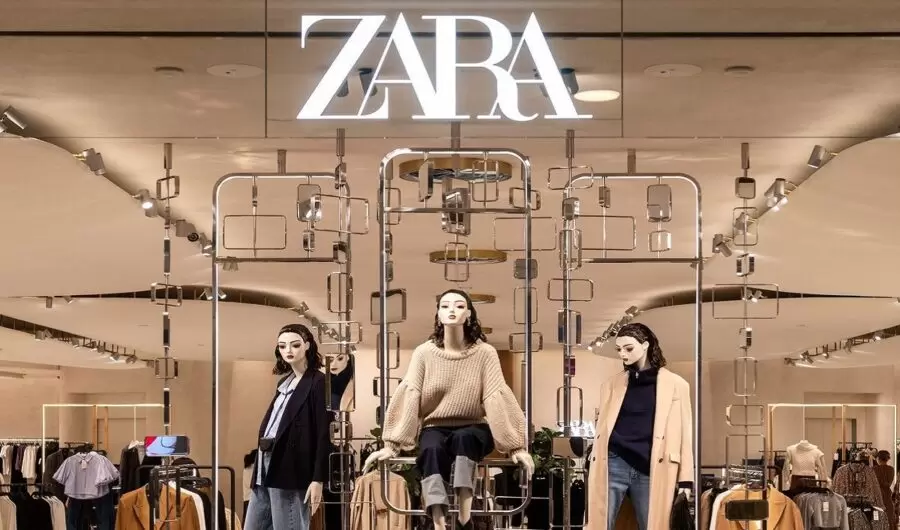
While many retailers are retreating from physical locations, Zara is doubling down on fewer, larger, and more technologically advanced flagship stores. This strategy, led by Inditex chair Marta Ortega, focuses on creating high-end experiences that combine the ease of digital shopping with the tactile nature of a boutique.
These flagship stores are designed to be centers of innovation. They serve as testing grounds for new AI tools, from automated fitting rooms to LiDAR-powered foot traffic analysis. By closing smaller, less efficient locations and focusing on these “mega-stores,” Zara is able to concentrate its technological investments where they have the most impact on both customer satisfaction and operational efficiency.
The Global Economic Impact of Retail AI
The shift toward AI-integrated workflows at Zara is reflective of a broader trend in the global economy. As labor costs rise and consumer expectations for speed and personalization increase, the retail sector is becoming one of the largest consumers of high-end enterprise technology. The successful implementation of these tools at a company as large as Inditex serves as a blueprint for other multinational corporations.
The move toward “data-driven” rather than “design-driven” fashion is also reshaping the global supply chain. It requires a more agile manufacturing base, often located closer to the final markets (near-shoring), to support the rapid turnaround times enabled by AI forecasting. This has profound implications for local economies in regions like North Africa, Turkey, and Eastern Europe, where much of Zara’s production is concentrated.
Future Projections: What to Expect in 2026
As we look toward 2026, the integration of AI in retail will only deepen. We can expect to see the rise of “Hyper-Personalization,” where the AI doesn’t just suggest a similar item but predicts a customer’s needs based on their unique lifestyle and calendar. Virtual try-on technology will likely move beyond simple overlays to highly accurate 3D simulations that account for fabric drape and body type with surgical precision.
Furthermore, the “AI-Front End” will become the primary way customers interact with brands. This means more than just a better chatbot; it means a completely customized digital shopping environment that changes in real time based on user behavior. Zara’s current workflow changes are the foundation for this future, proving that the most successful companies will be those that view AI not as an add-on, but as the core engine of their operation.