

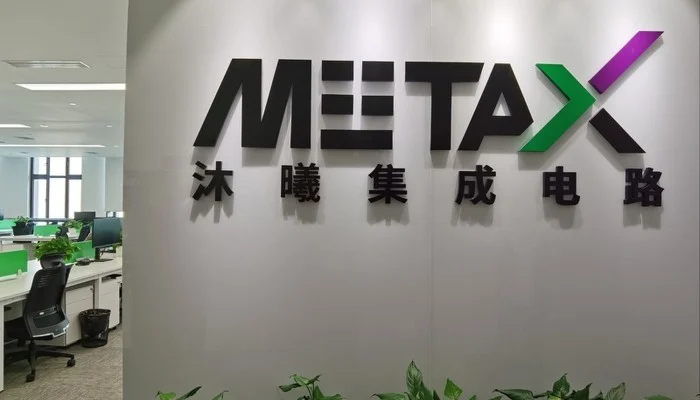

The global semiconductor landscape witnessed a seismic event this Wednesday that has redefined investor expectations for 2025. In a trading debut that can only be described as historic, MetaX Integrated Circuits Shanghai Co. (MetaX) saw its shares surge by a staggering 755% on the Shanghai Stock Exchange’s STAR Market. This is not just a successful IPO; it is a thundering declaration of capital flowing into the artificial intelligence infrastructure sector, specifically within markets aiming for technological sovereignty.
- The Financial Breakdown: A Record-Breaking Debut
- The Geopolitical Catalyst: Why Now?
- Technology Deep Dive: Can MetaX Compete with Nvidia?
- Investment Analysis: Risks and Opportunities in the AI Chip Sector
- The Broader Market Impact: A New Era of Competition
- Future Outlook: What to Watch in Q1 2026
- Conclusion
For seasoned investors and market watchers, this event signals a critical pivot point. The fervor surrounding MetaX is not merely about one company. It represents a broader, high-stakes narrative involving geopolitical trade tensions, the insatiable demand for generative AI compute power, and the aggressive reshuffling of global supply chains.
In this deep-dive analysis, we will unpack the financial mechanics of this debut, the technological capabilities of MetaX, and what this means for the broader investment horizon in AI hardware.
The Financial Breakdown: A Record-Breaking Debut
The raw numbers from Wednesday’s trading session in Shanghai paint a picture of frantic demand and scarcity value.
IPO Pricing and Valuation Surge
MetaX priced its initial public offering at 104.66 yuan per share. By the time the opening bell rang and early trades settled, the stock had opened at roughly 700 yuan, eventually climbing to an intraday high that represented a 755% gain.
- Funds Raised: The company successfully raised approximately $585.8 million (4.2 billion yuan).
- Market Capitalization: At its peak trading value, the company’s market cap soared past 280 billion yuan (roughly $42 billion USD).
- Oversubscription: The retail tranche of the IPO was oversubscribed by 2,986 times. To put this in perspective, this level of retail interest surpasses even some of the most legendary tech IPOs of the last decade.
This creates a massive liquidity event for early backers and signals a ravenous appetite among domestic Chinese investors for “hard tech” assets that align with national strategic interests.
Comparing the Titans: MetaX vs. Moore Threads
This debut comes hot on the heels of another major listing. Just days prior, Moore Threads Technology, another heavyweight in the Chinese GPU space, saw its own shares quadruple on debut. However, MetaX has managed to eclipse even that stellar performance in terms of retail oversubscription and single-day percentage gain.
Investors are currently valuing MetaX at a Price-to-Sales (P/S) ratio of roughly 56.4x based on its IPO filing data. While high, this is surprisingly lower than the peer average of 127.4x for similar companies like Cambricon Technologies. This discrepancy suggests that despite the massive surge, the market believes there is still significant headroom for growth, or perhaps that the sector as a whole is trading at a significant premium due to scarcity.
The Geopolitical Catalyst: Why Now?
To understand why a company with a net loss can command a $40 billion valuation, one must look at the geopolitical map. The United States has progressively tightened export controls on advanced semiconductors, specifically targeting Nvidia’s flagship AI chips like the A100, H100, and the newer Blackwell series.
This blockade has created a vacuum in the Chinese market. Tech giants like Alibaba, Tencent, and Baidu need massive amounts of compute power to train their Large Language Models (LLMs). With Nvidia’s top-tier chips largely off the table or difficult to procure, domestic alternatives have become the only viable path forward.
The “Sovereign AI” Narrative
Investors are betting on the “Sovereign AI” thesis. This investment philosophy posits that every major economic bloc will require its own independent supply chain for artificial intelligence hardware. Just as nations hold gold reserves, they now need “compute reserves.”
MetaX serves as a prime vehicle for this thesis. By investing in MetaX, traders are effectively longing the Chinese government’s commitment to semiconductor self-sufficiency. The capital injection from this IPO provides the war chest needed to accelerate R&D and bridge the performance gap with Western rivals.
Technology Deep Dive: Can MetaX Compete with Nvidia?
Valuation is one thing; silicon performance is another. MetaX was founded by Chen Weiliang, a former executive at AMD (Advanced Micro Devices), along with a team of veterans who understand the complexities of GPU architecture.
The C500 and C588 Series
MetaX has made bold claims regarding its product lineup:
- Xiyun C500 Series: The company claims this chip is comparable in performance to Nvidia’s A100. The A100 is the workhorse of the AI industry, used for both training and inference. In 2024, the C500 series reportedly accounted for nearly 98% of MetaX’s total revenue, proving that the company has moved beyond “powerpoint engineering” to shipping actual silicon.
- C588 Series: This is the newer generation chip, which MetaX asserts has significantly narrowed the gap with Nvidia’s H100. If true, this is a game-changer. The H100 is the current gold standard for training massive models like GPT-4. A domestic alternative that offers even 70% of the H100’s performance would immediately capture a massive market share in China.
The CUDA Barrier
The biggest hurdle for any GPU challenger is software. Nvidia’s CUDA ecosystem is the industry standard. Most AI developers write code optimized for CUDA.
MetaX, like Moore Threads and Huawei, is working on its own software stack. The success of their hardware depends entirely on how easily developers can port their code from CUDA to the MetaX platform. The massive capital raised in this IPO will likely be directed toward software support, driver optimization, and building a developer community—essential steps for enterprise adoption.
Investment Analysis: Risks and Opportunities in the AI Chip Sector
For the global investor, the MetaX IPO offers several critical lessons and potential strategies. While direct access to the Shanghai STAR Market can be difficult for international retail investors, the ripple effects are felt globally.
1. The Semiconductor Equipment Play
If MetaX and Moore Threads are ramping up production, they need manufacturing equipment. Since they cannot access the absolute cutting-edge EUV lithography machines from ASML due to sanctions, they are likely relying on deep UV (DUV) technology and advanced packaging techniques.
Smart money is looking at the supply chain feeding these companies. This includes:
- Advanced Packaging Firms: Companies that specialize in Chip-on-Wafer-on-Substrate (CoWoS) technologies.
- EDA Software Providers: The tools used to design these chips.
- Domestic Foundries: SMIC (Semiconductor Manufacturing International Corp) is the primary beneficiary of orders from fabless designers like MetaX.
2. The ETF Strategy for Volatility
The volatility seen in the MetaX debut (755% in a day) highlights the extreme risk-reward profile of individual semiconductor stocks. For investors looking to capture growth without singular company risk, Semiconductor ETFs (Exchange Traded Funds) are a primary instrument.
Funds that track the broader Asia-Pacific tech sector or specific semiconductor indices often rebalance to include emerging giants. Watching the inflows into these funds can provide early signals of institutional sentiment shifting toward Asian hardware manufacturers.
3. Risk Factors to Consider
Despite the euphoria, significant risks remain:
- Profitability: MetaX, like many high-growth tech firms, is still burning cash. The company reported a net loss of 345.5 million yuan in the first nine months of the year, despite revenue skyrocketing.
- Client Concentration: The prospectus noted that a significant portion of revenue came from a minority shareholder. This type of related-party transaction can sometimes mask the true organic demand for the product.
- Sanctions Risk: There is always the risk that the US Department of Commerce could further tighten restrictions, potentially cutting off MetaX’s access to global foundries or specific materials required for chip fabrication.
The Broader Market Impact: A New Era of Competition
The MetaX debut is not an isolated incident; it is part of a trend. We are seeing a “Cambrian Explosion” of AI silicon.
- Nvidia remains the undisputed king, but its monopoly is being chipped away at the edges by sovereign players.
- AMD and Intel are fighting for the number two spot in the West.
- MetaX, Moore Threads, Biren, and Huawei are locking down the massive Chinese market.
This fragmentation means the days of a “one-size-fits-all” AI chip market are ending. We are moving toward a regionalized market structure where hardware choices are dictated by geography and trade alignment as much as by floating-point performance.
Enterprise Implications
For Chief Technology Officers (CTOs) and enterprise IT decision-makers, this fragmentation introduces complexity. Multi-cloud strategies will now need to account for hardware diversity. An AI model trained on Nvidia clusters in Virginia might need to be fine-tuned to run on MetaX clusters in Shanghai for local deployment. This creates a demand for MLOps (Machine Learning Operations) software that can abstract away the underlying hardware layer.
Future Outlook: What to Watch in Q1 2026
As we look toward the next quarter, several indicators will determine if MetaX can hold its valuation.
- Mass Production Yields: Can they manufacture the C588 in volume without significant defect rates?
- Benchmark verifications: Independent third-party benchmarks comparing the C588 to the H100 will be the ultimate truth-teller.
- Revenue Growth vs. Burn Rate: Investors will want to see the path to profitability narrow.
The 755% surge is a victory for sentiment, but the long-term war will be won on silicon execution.
Conclusion
The trading debut of MetaX is a watershed moment for the global semiconductor industry. It validates the immense capital available for AI infrastructure outside of Silicon Valley and highlights the bifurcation of the global tech stack.
For investors, the message is clear: The AI hardware trade is far from over; it is simply entering a more complex, geopolitical phase. Whether you are looking at ETFs, direct equity, or analyzing the supply chain, the liquidity event in Shanghai is a signal that capital is aggressively hunting for the next Nvidia.