


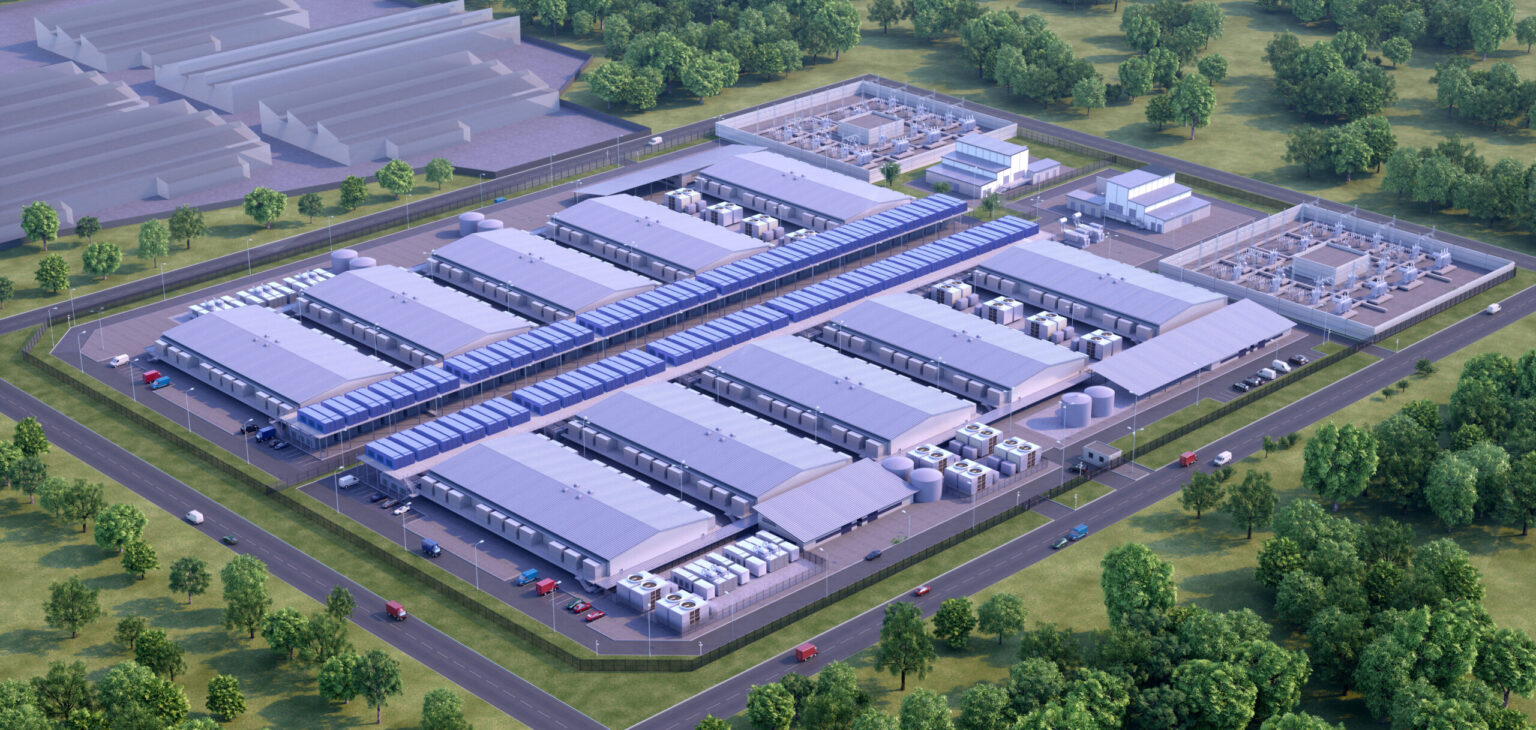

In the high stakes game of global technology dominance, a new battlefield has emerged, not in the sprawling campuses of California or the neon lit streets of Tokyo, but in the palm plantations and industrial parks of Malaysia. We are witnessing a seismic shift in the digital geography of Asia. The article “Malaysia’s data center boom: An inside look at Asia’s battle for AI supremacy” from Nikkei Asia paints a vivid picture of this transformation, but today, I want to take you deeper. I want to peel back the layers of this “data center boom” to understand the lucrative machinery driving it, the massive enterprise cloud computing investments fueling it, and the daily developments that are turning Johor Bahru into the next great tech hub.
- The New Center of Gravity for Asian Tech
- LIVE UPDATE: The Pulse of the Boom (December 17, 2025)
- The Architecture of AI Supremacy
- The Economic Ripple Effect: More Than Just Servers
- Nvidia, YTL, and the AI Supercomputer
- Challenges on the Horizon: The Water and Power Crunch
- The Johor Singapore Special Economic Zone (JS SEZ)
- Future Outlook: 2025 and Beyond
- The Digital Foundry of Asia
If you are an investor, a tech enthusiast, or a business leader looking for managed dedicated server solutions, pay attention. The infrastructure being built right now in Malaysia is not just about concrete and cables; it is the backbone of the next decade’s artificial intelligence economy.
The New Center of Gravity for Asian Tech
For years, Singapore held the crown as the undisputed data center hub of Southeast Asia. Its robust infrastructure, political stability, and high speed connectivity made it the default choice for global colocation services. However, geography and physics are stubborn realities. Singapore is land scarce and power constrained. When the government there hit the pause button on new data center builds to manage carbon footprints, the spillover effect was immediate and massive.
Just across the causeway lies Johor Bahru. Once seen merely as a manufacturing hinterland for its wealthy neighbor, Johor has reinvented itself as the engine room for Asia’s digital future. The transformation is staggering. We are seeing a rush that rivals the California Gold Rush, but instead of pickaxes, the tools of choice are liquid cooling systems and high density server racks.
This is not a gradual rise. It is an explosion. The market for data center infrastructure in Malaysia is projected to capture a significant chunk of the ASEAN digital economy, which is itself sprinting toward a trillion dollar valuation. The driving force? The insatiable hunger for compute power to train Large Language Models (LLMs) and support generative AI applications.
LIVE UPDATE: The Pulse of the Boom (December 17, 2025)
To give you a sense of how fast this market is moving, let’s look at the news from just the last 48 hours. This is not historical data; this is the live pulse of the industry.
TotalEnergies and Google’s Massive Green Deal
Just yesterday, December 16, 2025, a game changing agreement was signed. TotalEnergies and Google entered into a 21 year Power Purchase Agreement (PPA). The deal? To supply Google with 1 Terawatt hour (TWh) of renewable energy to power its burgeoning data center operations in Malaysia. This is critical because green energy solutions for data centers are no longer a “nice to have” they are a prerequisite for doing business at this scale. The power will come from the new Citra Energies solar plant in Kedah. This signals that the big players are not just buying land; they are fundamentally reshaping the energy grid to support sustainable cloud hosting.
Pasukhas Secures Major Contract
On the construction front, the momentum is equally fierce. On December 15, 2025, Pasukhas Group Bhd secured a massive RM63.6 million contract to build a data center in Johor Bahru for a “leading multinational technology corporation headquartered in the US.” While the client’s name is confidential, the scale of the project speaks volumes. This is a prime example of how the boom is cascading down to local engineering firms, creating a vibrant ecosystem for construction project management and industrial engineering services.
ByteDance’s Billion Dollar Bet
We also cannot ignore the aggressive moves by Chinese tech giants. ByteDance has committed to investing RM10 billion to establish Malaysia as a dedicated AI hub. This investment is not just about storage; it is about creating a comprehensive AI ecosystem that includes GPU as a Service offerings and advanced machine learning infrastructure.
The Architecture of AI Supremacy
Why is this happening now? The answer lies in the technical demands of modern AI. Traditional data centers, built for standard web hosting and corporate IT, are simply not dense enough for the era of ChatGPT and Gemini.
The Rise of High Density Computing
AI workloads require massive parallel processing power. This means packing thousands of GPUs into tight clusters. The heat generated by these AI ready server racks is immense. This has triggered a surge in demand for advanced liquid cooling technologies. We are moving away from air cooled rows to direct to chip cooling and immersion cooling solutions. For hardware manufacturers and IT infrastructure vendors, this is a golden era of innovation and sales. Companies that can provide energy efficient cooling systems are seeing their valuations soar.
The Role of Cloud Service Providers (CSPs)
The “Hyperscalers” Microsoft Azure, Google Cloud, Amazon Web Services (AWS) are in a race to secure capacity. They need scalable cloud architecture that can be deployed in months, not years. Malaysia offers the perfect storm of conditions:
- Land Availability: Unlike Singapore, Johor has vast tracts of land suitable for mega campuses.
- Power Access: While grid constraints are a global issue, Malaysia’s Tenaga Nasional Berhad (TNB) has been proactive in upgrading transmission lines to support high voltage power supply for these facilities.
- Connectivity: The subsea cables landing in Malaysia provide low latency links to the rest of the world, essential for global content delivery networks (CDN).
The Economic Ripple Effect: More Than Just Servers
It is a mistake to think of data centers as just “warehouses for computers” with few jobs. The economic reality is far more complex and lucrative. When a Hyperscaler lands in Johor, they bring with them a demand for a sophisticated service layer.
Enterprise Cybersecurity Solutions
With great data comes great responsibility. The concentration of sensitive data in Malaysia has created a skyrocketing demand for enterprise cybersecurity services. We are talking about DDoS protection, cloud security posture management, and zero trust security architectures. Financial institutions and multinational corporations hosting their data here need assurances that their digital assets are impregnable. This has opened the floodgates for cybersecurity consulting firms and managed security service providers (MSSPs).
Managed IT Services
Not every company builds their own data center. Most rely on colocation providers or managed cloud services. This sector is booming. Businesses are looking for partners who can handle cloud migration strategies, hybrid cloud management, and disaster recovery planning. The margins in these services are healthy, and the demand is recurring. If you are in the B2B tech services space, Malaysia is currently the most exciting market in Asia.
The Green Energy Imperative
As mentioned with the Google deal, energy is the currency of the AI age. But it must be green. This has catalyzed a secondary boom in renewable energy infrastructure. Solar farm developers, energy storage system manufacturers, and smart grid technology providers are all converging on the region. The integration of IoT energy management systems within these data centers is becoming standard, offering high value opportunities for industrial automation companies.
Nvidia, YTL, and the AI Supercomputer
One of the most defining moments in this saga was the partnership between YTL Power and Nvidia. They are not just building a data center; they are building an AI supercomputer. This facility, powered by Nvidia’s latest H100 and Blackwell chips, will offer AI cloud computing capabilities that were previously accessible only to the world’s largest research labs.
For Malaysian businesses, this is a game changer. It means access to high performance computing (HPC) locally. It lowers the barrier to entry for local startups to develop large language models and computer vision applications. It creates a domestic market for AI software development and data science consulting.
Challenges on the Horizon: The Water and Power Crunch
No boom is without its bottlenecks. The Nikkei Asia article rightly points out the strain on resources. Data centers are thirsty. Water cooling systems consume millions of liters of water. In a region that occasionally faces water stress, this is a political and environmental hot potato.
This challenge, however, is also a market opportunity. It drives demand for industrial water treatment solutions and closed loop cooling systems. We are seeing a rise in inquiries for desalination technology and wastewater recycling for industrial use. Innovation often follows necessity, and Malaysia is becoming a testbed for sustainable data center design.
Power is another constraint. While TNB is confident, the sheer speed of the buildup is testing the grid. This is leading to a spike in interest for backup power generators, uninterruptible power supply (UPS) systems, and on site power generation using natural gas or hydrogen. For suppliers of industrial electrical equipment, the order books are full.
The Johor Singapore Special Economic Zone (JS SEZ)
A critical piece of the puzzle is the upcoming Johor Singapore Special Economic Zone. This policy framework aims to seamless integrate the economies of the two regions. For the data center industry, this promises smoother cross border data flows and easier movement of talent.
It effectively creates a twin city model. Singapore remains the HQ node, where the business intelligence and strategy consulting happens, while Johor becomes the execution node, where the heavy compute infrastructure and cloud storage arrays reside. This symbiosis increases the value of the entire region, attracting even more foreign direct investment (FDI).
Future Outlook: 2025 and Beyond
As we look toward the rest of 2025 and into 2026, the trajectory is clear. The “land grab” phase is maturing into the “operational efficiency” phase. The conversation is shifting from “how many megawatts can we secure?” to “how efficiently can we run this workload?”
We will see a rise in AI driven data center management software. These tools use machine learning to optimize cooling, power usage, and server load balancing in real time. predictive maintenance solutions will become standard to ensure the 99.999% uptime that enterprise cloud SLAs demand.
We will also see a diversification of locations. While Johor is the star, states like Kedah (as seen in the Google deal) and Selangor are picking up the pace. The digital infrastructure is spreading nationwide, bringing high speed fiber optic connectivity to second tier cities.
The Digital Foundry of Asia
Malaysia’s data center boom is not a bubble; it is a structural shift in the global economy. It is the physical manifestation of the AI revolution. For the tech industry, it represents a frontier of immense opportunity. From cloud hosting providers to green energy consultants, the ecosystem is vast and hungry for solutions.
The battle for AI supremacy is being fought with silicon, steel, and solar panels. And right now, Malaysia is winning